

The Process and Benefits of Cracked Alloy Wheel Welding
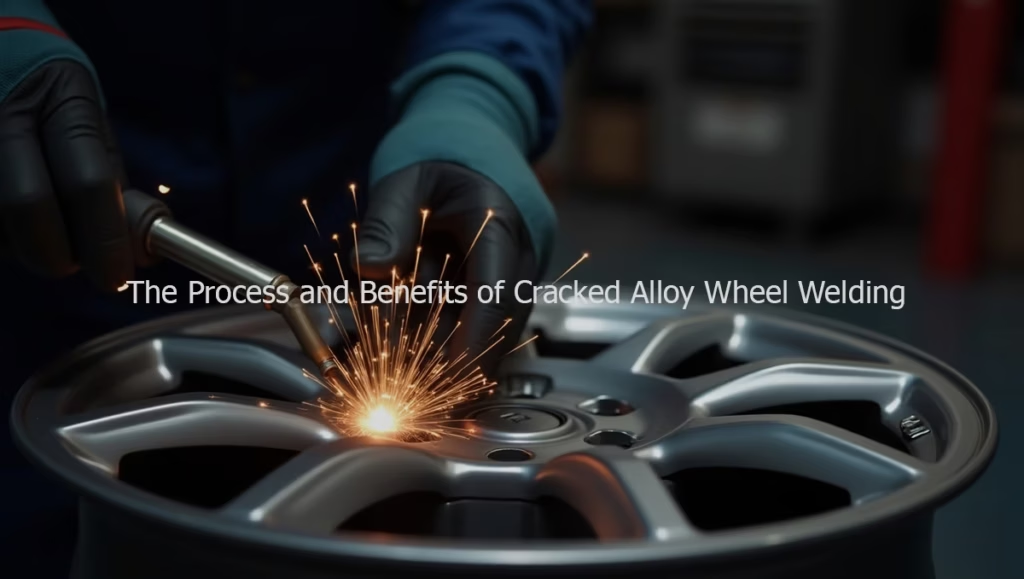
Alloy wheels are a stylish and high-performance feature for many vehicles across the UK. But when they suffer from cracks due to potholes, kerbs, or general wear and tear, it can be both dangerous and costly. Fortunately, cracked alloy wheel welding offers a safe and cost-effective solution.
In this blog, we’ll explain how the process works, its benefits, and when it’s the right option—especially for drivers in Slough, Reading, Windsor, and across Berkshire.
What Is Cracked Alloy Wheel Welding?
Cracked alloy wheel welding is a professional repair method that involves welding the cracked section of a wheel using a high-strength filler metal, followed by grinding and refinishing the surface to restore its structural integrity and appearance.
How the Process Works:
- Inspection & Diagnosis
Technicians thoroughly inspect the wheel to assess the damage and determine if welding is suitable. - Cleaning the Wheel
The area around the crack is cleaned to remove dirt, grease, and oxidation. - Crack Preparation
The crack is opened slightly using a grinder to create a proper channel for welding. - Welding
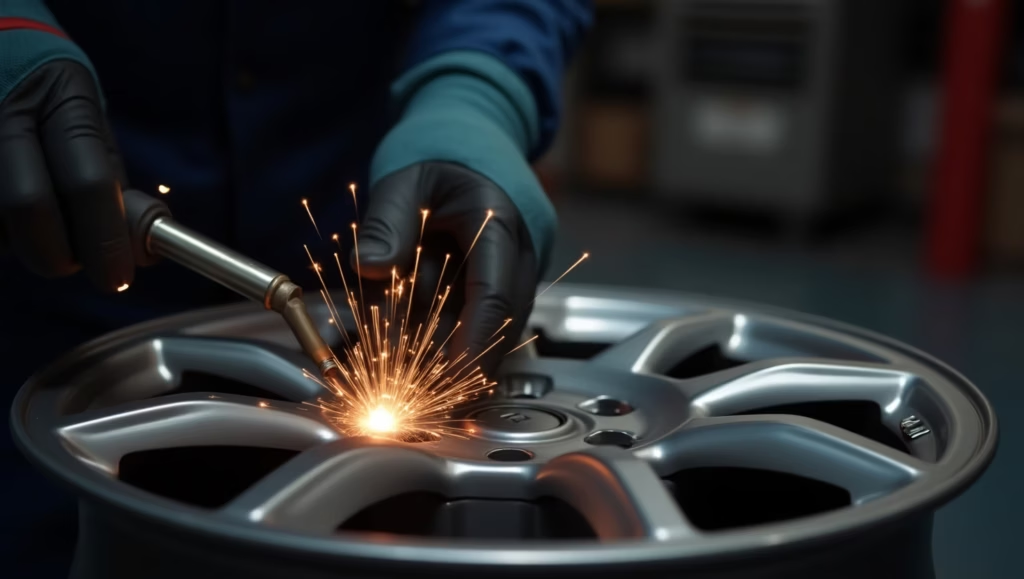
A specialist uses TIG (Tungsten Inert Gas) welding or MIG (Metal Inert Gas) welding to repair the crack with a high-strength aluminium alloy filler. - Grinding & Smoothing
Once the weld cools, the wheel is ground down and smoothed for a flush finish. - Balancing & Refinishing
The wheel is balanced and painted or coated to match the original look, ensuring it’s both safe and stylish.